
Build Software Features Users Actually Need
Turn product requirements into well-designed, tested, and production-ready software features across web, mobile, AI, and enterprise applications.
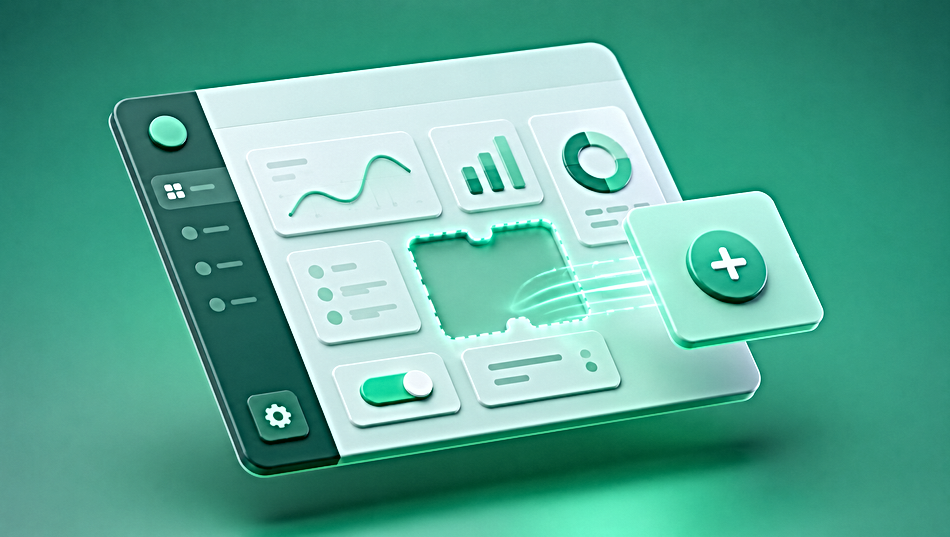
Feature engineering services focus on implementing individual capabilities within an existing software product without disrupting what already works. Common pain points include backlogged feature requests, features that ship buggy or half-finished, and in-house teams stretched too thin to take on new scope. Our approach solves this by planning, designing, implementing, testing, and integrating features such as login, search, file uploads, recommendations, real-time chat, dashboards, subscriptions, notifications, and workflow automation — delivered as production-ready additions to your codebase.
Every product has a backlog of features that never quite get built — not because they're technically hard, but because the in-house team is stretched across everything else. Feature engineering is about turning a specific requirement into a well-designed, tested, production-ready capability inside an existing product, without disrupting what's already there.
What Is Feature Engineering?
Feature engineering is the process of turning a specific product requirement into a working software capability.
A feature is something a user, administrator, business team, or another system can actually use. Examples include search, file upload, chat, notifications, dashboards, subscriptions, recommendations, filtering, export, or AI-assisted functionality.
Feature engineering sits between product requirements and implementation. It requires understanding what the feature needs to do, how users interact with it, what data it requires, how it fits into the existing architecture, and how it should behave under normal and exceptional conditions.
A feature may involve frontend interfaces, backend logic, APIs, databases, integrations, background processing, AI models, and testing. The scope depends on the capability being implemented.
Types of Features We Engineer
Feature Type | Examples | Typical Engineering Work |
Authentication Features | Login, signup, MFA, password reset | UI, identity flows, sessions, security |
Search Features | Keyword, filters, semantic search | Indexing, retrieval, ranking, UI |
Communication Features | Chat, comments, messaging | APIs, persistence, real-time updates |
Payment Features | Checkout, subscriptions, invoices | Payment APIs, billing, webhooks |
Dashboard Features | Metrics, charts, activity feeds | Data aggregation, visualization |
File Features | Upload, preview, export, sharing | Storage, validation, processing |
Notification Features | Email, SMS, push, alerts | Events, queues, delivery |
Workflow Features | Approvals, assignments, automation | State management, rules, events |
AI Features | AI chat, summarization, recommendations | Models, prompts, retrieval, evaluation |
Search & Discovery | Suggestions, filters, recommendations | Ranking, personalization, indexing |
Reporting Features | Reports, exports, scheduled reports | Queries, aggregation, formatting |
Administration Features | Settings, roles, configuration | Permissions, management interfaces |
From Requirement to Working Feature
A feature should not be treated as isolated code. It needs to fit the product and its existing architecture.
Understand the Requirement
Define the user problem, expected behavior, inputs, outputs, constraints, and success criteria.
Define the User Flow
Determine how users or other systems start the feature, interact with it, and complete the workflow.
Design the Technical Approach
Identify required frontend components, backend logic, APIs, data changes, integrations, and dependencies.
Implement
Build the feature across the necessary application layers.
Integrate
Connect the feature with existing modules, services, databases, APIs, authentication, notifications, or external platforms.
Validate
Test normal workflows, edge cases, errors, permissions, and integration behavior.
Release
Deploy the feature through the appropriate development, staging, and production workflows.
Improve
Monitor usage and technical behavior and make improvements based on real-world requirements.
Feature Engineering Across the Application
A single feature may involve several layers.
Layer | Typical Feature Engineering Work |
User Interface | Screens, forms, controls, states, responsive behavior |
Frontend Logic | Validation, state management, API integration |
Backend | Business logic, services, processing, authorization |
API | Endpoints, request/response contracts, validation |
Database | Tables, relationships, queries, migrations |
Integrations | External APIs, webhooks, cloud services |
Background Processing | Queues, workers, scheduled jobs |
AI | Models, prompts, retrieval, inference, evaluation |
Notifications | Email, SMS, push, in-app events |
Testing | Unit, integration, API, and end-to-end testing |
This is why even a seemingly small product feature can require coordinated engineering across multiple parts of an application.
Common Features We Build
Feature | Common Use Cases | Engineering Considerations |
User Authentication | Login, signup, SSO | Security, sessions, identity |
Search | Products, documents, users | Relevance, indexing, performance |
Chat | Support, collaboration, AI assistants | Real-time communication, persistence |
Notifications | Alerts, reminders, updates | Delivery, queues, preferences |
Subscriptions | SaaS billing | Plans, payments, webhooks |
File Upload | Documents, images, attachments | Validation, storage, security |
Dashboards | Analytics, operations | Data aggregation, visualization |
Filters | Search, catalogs, reports | Query design, performance |
Recommendations | Products, content, personalization | Ranking, user behavior |
AI Assistant | Support, research, productivity | LLMs, context, evaluation |
Export | Reports, datasets, documents | Processing, formatting, permissions |
Approval Workflow | Business operations | States, roles, notifications |
Feature Engineering for Existing Products
Feature engineering is often performed within an existing application rather than a new product.
Existing products may need new capabilities while preserving their current users, data, architecture, and integrations.
Typical work includes:
Adding new product capabilities
Extending existing workflows
Modifying existing user interfaces
Adding new APIs
Extending database models
Connecting new third-party services
Adding AI capabilities
Improving existing features
Refactoring code required for a new capability
Maintaining backward compatibility
Adding tests around existing functionality
The feature should fit the existing product rather than introduce unnecessary architectural complexity.
Feature Engineering for AI Products
AI features often require additional engineering beyond connecting an application to a model API.
An AI-powered feature may involve:
Prompt design
Model selection
Context construction
Retrieval
Vector search
Tool calling
Structured outputs
Streaming responses
Guardrails
Evaluation
Feedback collection
Cost management
Latency optimization
Monitoring
Examples include AI chat, document summarization, intelligent search, classification, recommendations, content generation, and AI-assisted workflows.
Feature Engineering Capabilities
Capability | What It Covers |
Feature Architecture | Technical structure and integration with the application |
UI Development | Screens, forms, interactions, responsive interfaces |
Backend Development | Business rules and processing |
API Development | Endpoints, contracts, validation |
Database Changes | Schemas, migrations, queries |
Integration | External services and internal modules |
AI Integration | LLMs, models, retrieval, agents |
Testing | Unit, integration, API, end-to-end |
Performance | Query, API, frontend, and processing optimization |
Security | Permissions, validation, data protection |
Deployment | CI/CD, environments, release management |
Monitoring | Logs, metrics, errors, feature behavior |
What Makes a Well-Engineered Feature?
A feature should do more than satisfy the happy path.
Clear Behavior
Users and other system components should have predictable expectations about what the feature does.
Good Integration
The feature should work correctly with existing modules, APIs, data, authentication, and workflows.
Appropriate Validation
Inputs, permissions, business rules, and edge cases should be handled appropriately.
Maintainable Implementation
The implementation should remain understandable and adaptable as the product evolves.
Reliable Error Handling
Expected failures should be handled without creating inconsistent application states.
Test Coverage
Important workflows and edge cases should be covered by appropriate tests.
Production Awareness
Performance, security, monitoring, deployment, and operational considerations should be addressed when relevant.
Technologies Used in Feature Engineering
Feature implementation usually spans multiple technologies depending on the product architecture.
Frontend: React, Next.js, Vue, JavaScript, TypeScript
Backend: Python, Django, FastAPI, Node.js, Java, Go
Databases: PostgreSQL, MySQL, MongoDB, Redis
APIs: REST, GraphQL, WebSockets, gRPC, Webhooks
AI: PyTorch, TensorFlow, Hugging Face, LLM APIs, vector databases, RAG and agent frameworks
Cloud: AWS, Azure, Google Cloud
Infrastructure: Docker, Kubernetes, Terraform
Testing: Unit, integration, API, end-to-end, and performance testing
Feature Engineering With Codersarts
Codersarts helps design and implement individual product capabilities within new and existing software applications.
Feature engineering work can include:
New feature development
Feature enhancement
Feature modernization
Frontend feature development
Backend feature development
API development
Database changes
AI feature development
Search and recommendation features
Workflow features
Payment features
Notification features
Dashboard and reporting features
Third-party integrations
Feature testing
Performance optimization
Production deployment
We can work from a product requirement, functional specification, existing application, technical design, or defined feature request.
Feature Engineering FAQs
What is feature engineering in software development?
Feature engineering is the process of designing and implementing a specific product capability that solves a user or business requirement.
What is the difference between a feature and a module?
A feature is generally a specific product capability. A module is a broader technical component that may contain several related features and business workflows.
Can you develop features for an existing application?
Yes. Features can be added to existing applications while working with their current architecture, database, APIs, authentication, and integrations.
Can AI features be added to existing software?
Yes. AI capabilities such as chat, summarization, search, recommendations, classification, content generation, and automation can be integrated into existing applications where appropriate.
How long does feature development take?
The timeline depends on the feature's complexity, required integrations, UI, backend changes, data requirements, testing, and existing application architecture.
Does feature engineering include frontend and backend development?
It can. A feature may require frontend interfaces, backend logic, APIs, database changes, integrations, background processing, and testing.
How do you prevent a new feature from breaking an existing application?
Feature development should consider existing dependencies, interfaces, data structures, permissions, workflows, backward compatibility, regression testing, and deployment practices.
Build the Next Capability Your Product Needs
Whether you need a new user-facing capability, an AI-powered workflow, a business feature, or an enhancement to an existing application, feature engineering turns a defined requirement into working software.
Discuss Your Feature